What is CSCR?
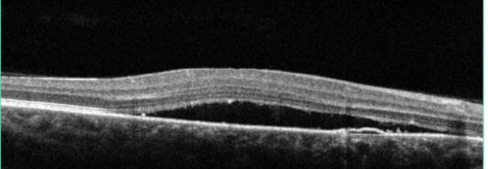
CSCR is a common retinal condition typically occur occurring in males at the age of 20 to 50 years. The patients present with symptoms of a sudden loss of central vision. Patients can present with symptoms of reduced near vision, distortion in vision or change in the refractive error. The exact mechanism of CSCR is not known but just thought to be a result of change in the permeability of the choriocapillaries and dysfunction of the retinal pigment epithelium this results in the serous detachment of the retina (Figure).
How long does CSCR last?
In most patients CSCR resolves in 4 to 6 months resulting in a good recovery of vision
However, CSCR can recur in up to 50% of patients within 1 year.
Is vision loss in central serous retinopathy permanent?
In a small percentage of patients, CSCR can be chronic and patients can lose vision
What is the best treatment for CSCR?
Since CSCR can resolve spontaneously; observation (with management of risk factors) is used as the primary modality of treatment of management in patients presenting with acute CSCR. However, in patients who present with chronic CSCR, photodynamic therapy or Laser photocoagulation is used for treatment. In patients who develop choroidal neovascularisation in CSCR, vascular endothelial growth factor can be considered.
What are the risk factors associated with CSCR?
Stress has been associated with an increased risk of CSCR. Other factors include patients with Type A personality, those on steroids, obstructive sleep apnoea, and pregnancy.